
Where Neural Networks Earn Their Keep in Demand Planning
When neural networks improve demand forecasts, how to train them on short weekly histories, and why every model should compete against simpler ones before it ships.
October 17, 2026Read More »
In my previous blog “Beginning Our Beverage Journey: Key Factors that Differentiate the Market”, we reviewed factors that make the non-alcoholic beverage industry unique. Here, we will explore beverage product proliferation and other important questions we should ask concerning key beverage sector characteristics.
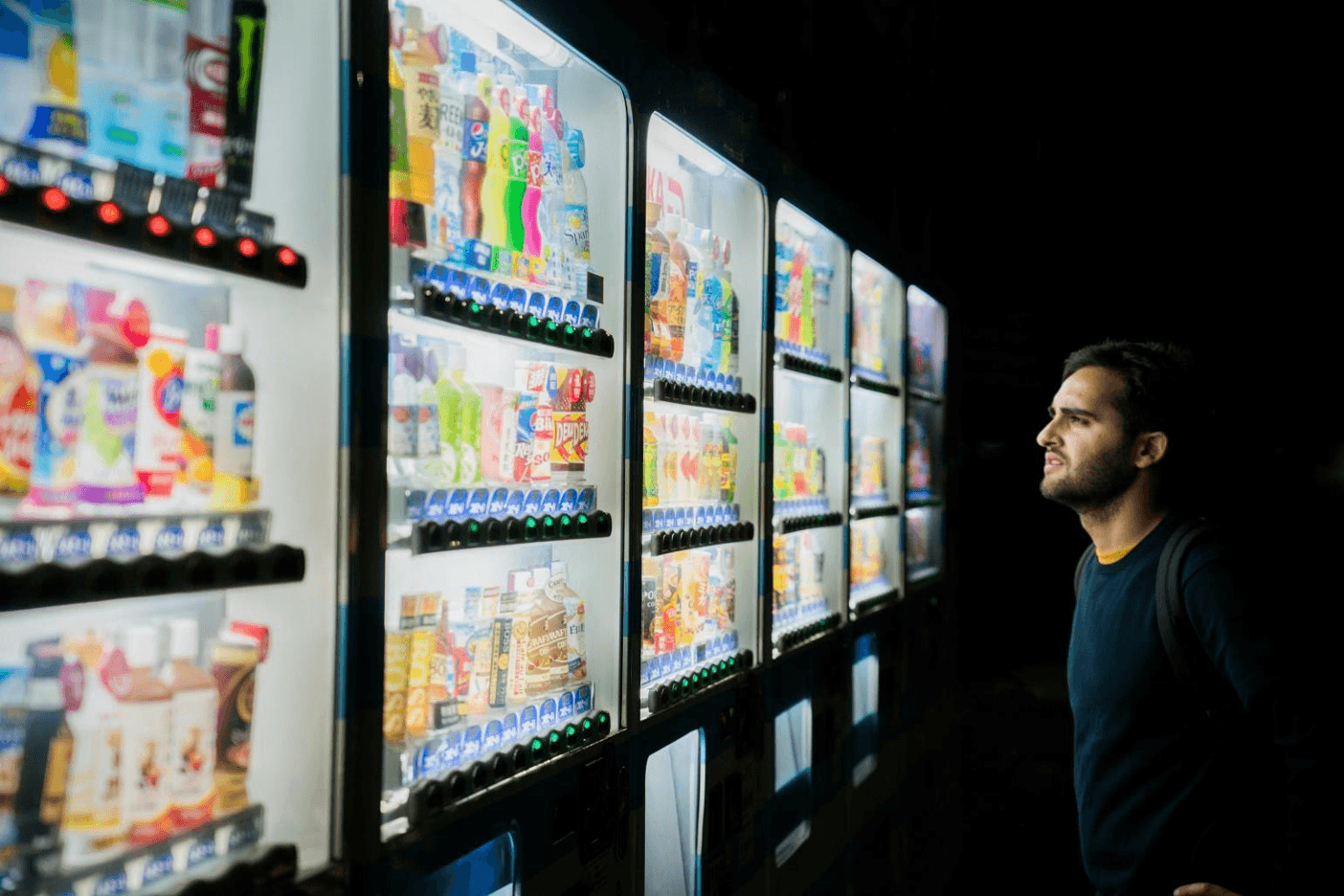
In the beverage industry, product proliferation refers to a company strategy that promotes introducing and offering a wide variety of SKUs to meet diverse consumer preferences. New SKU introduction may include products with different flavors, additives, formulations, packaging sizes and branding variations. The goal of this strategy is to capture a larger market share, cater to niche markets and compete for customer choice.
However, product proliferation significantly increases competition for product line times. Line capacity is even more of a concern when new SKUs are added to a “swing line” that runs two or more packages that require a substantial amount of changeover time to switch between. As more and more products are added to a package production window, it becomes more and more difficult to ensure that each product is produced in sufficient quantity to maintain safety inventory until the next production opportunity occurs.
Product proliferation also strains warehouse floor space, especially for slow-moving SKUs. Turns per pallet position are often longer for new SKUs as they are being introduced and therefore they typically occupy more floor space per case sold than established products. When warehouse capacity is a bottleneck, sourcing a lot of new and slow-moving products only aggravates the problem.
Additionally, new juice, dairy-based and non-carbonated beverage (NCB) SKUs often require special equipment, ingredients and procedures, making them costlier to product than carbonated beverages. In order to justify the investment in NCBs, there is continuous pressure to supply an even greater variety of flavors requiring more warehouse space and additional competition for line time and planning resources. Due to the cost of NCB-dedicated lines, there is often a decision to consolidate production into a single location resulting in a large single-source multi echelon supply network. This type of sourcing inevitably results in increased product handling, planning complexity, high across-the-network inventories and higher associated supply-side costs.
It is natural to try to apply knowledge of one bottling operation to another, however, it is important to consider that operations in different regions of the country (or other countries) can have very different constraints, costs, product portfolios, fleets, markets and cultures. We also know from experience that all of these factors will change over time.
When evaluating a particular operational strategy, it is always important to ask critical questions and challenge assumptions. For example
Only by gathering information and exploring all of the possibilities can you begin to design the most effective Supply Chain management strategy for your enterprise.
Upon reviewing the complicated realities of the beverage supply chain, it is evident that it is substantially more difficult to manage than the standard presented in textbooks for typical consumer products. Though it may be relatively easy to produce beverages, the dynamic management challenges that exist in the beverage supply chain make the situation more difficult and complex than it initially appears.
The combination of very large aggregate sales volume, expensive alternate sourcing, Direct Store Delivery (DSD) with short delivery lead times, high demand variability, a highly dynamic market added to the crucial requirement of near perfect customer service creates a supply chain which is almost unique among consumer products.
The importance of using and updating sophisticated planning processes and systems that are highly tailored to the beverage supply chain cannot be overstated. Areté's Demand Planning and Supply Planning solutions are designed to handle the beverage supply chain in an elegant and effective way to allow end-to-end management from supplier to consumer.
In the next blog of this series, Inventory Fundamentals: Understanding Four Essential Types, we will investigate four types of stock and the business reasons that inventory is held for each of the four classifications. Please subscribe to our blog to be notified as soon as the next entry in this series is available to you!

JR has 2 decades of experience in Demand and Supply Planning helping customers achieve desired results.
When neural networks improve demand forecasts, how to train them on short weekly histories, and why every model should compete against simpler ones before it ships.

A better forecast doesn't touch most of a planner's Monday morning. Agentic AI goes after the work that follows it: replenishment, exception triage, safety stock, promotion response, and supplier follow-up. What agents take on, what stays with the planner, and the questions to ask before you turn one on.

A single temperature excursion can make a whole truckload unsaleable, and cold chain failures often stay invisible until a return or an inspection. The five metrics that form a cold chain measurement program, the targets to hold them to, and the management practices behind them: carrier qualification, FEFO rotation, temperature mapping, and incident response.