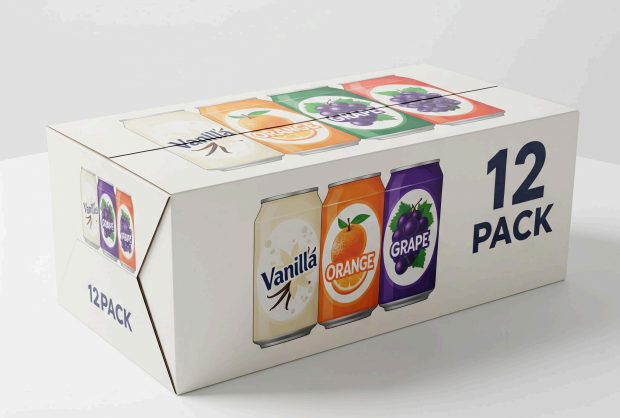
Rainbow Packs (a.k.a. Rainbow Products) are bundle packages consisting of multiple variants of the same item type, e.g., different flavors, brands, or formulations. They are a popular strategy used to boost sales, enhance customer choice and clear inventory, however they often introduce production and logistical complexities.
Common Examples of Rainbow Packs
Examples across industries:
● Beverages: Mixed soda 12-packs (e.g., 4 flavors × 3 cans each)
● Snacks: Assorted chip or candy variety packs
● Consumer Goods: Multi-color bundles (e.g., markers, apparel)
Why Use Rainbow Packs?
- Sales Lift: Pair slow-moving SKUs with bestsellers.
- Customer Appeal: Offer variety in one purchase and introduce new varieties.
- Inventory Management: Bundle excess stock into attractive packs.
Be conscious of:
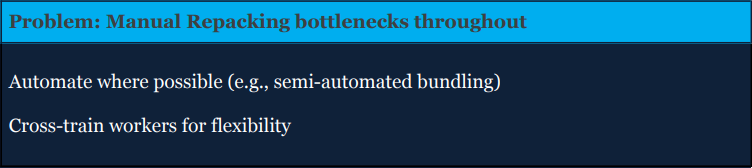
⚠️ Higher labor costs (may involve manual repacking)
⚠️ Complex production scheduling (synchronize component item ratios)
⚠️ Inventory headaches (tracking both individual and bundled SKUs)
Four Common Methods for Producing Rainbow Packs
Depending on your facility’s capabilities, Rainbow Pack production choices include:
1. Same-Line Repacking (A)
○ Components are produced on one specific line, then repacked. ○ Best for: High-volume, low-mix production scenarios.
2. Cross-Plant Repacking (B)
○ Components are produced in different sites, then shipped for bundling.
○ Best for: Multi-site operations with central distribution.
3. Just-in-Time Hand-Adding (C) ○ Pre-made components and one produced item added during packing.
○ Best for: Limited storage and flexible labor scenarios.
4. Dedicated Rainbow Filler (D)
○ A specialized machine produces all variants in one integrated operation.
○ Best for: Large-scale, high-demand production.
Which Production Method should you choose?
● Methods A–C require tight scheduling and labor planning.
● Method D is most efficient but needs capital investment.
Rainbow Pack Key Challenges & Solutions
1. Production Scheduling
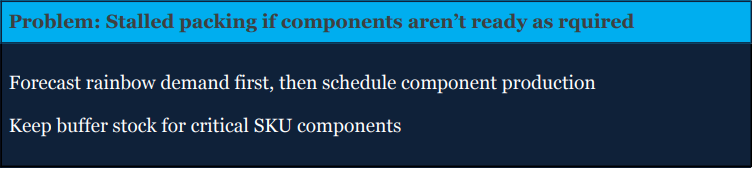
2. Inventory Management

3. Labor Efficiency
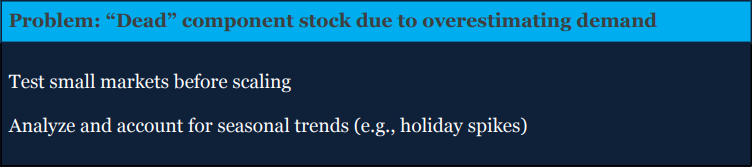
4. Demand Forecasting
Best Practices for Rainbow Pack Planning
● Focus on Planning Component SKU Production Ratios Accurately ○ Avoid component mismatches (e.g., 10,000 Lime cans but only 2,000 Lemon).
● Optimize Workflow ○ Use pre-kitting stations and color-coded bins to increase packing efficiency.
● Monitor Waste ○ Adjust component production based on leftover SKU trends.
● Leverage Tech ○ Utilize ERP/MES systems and barcode scanning to reduce pack errors.
Conclusion: Are Rainbow Packs Right for You?
Implementing Rainbow Packs can drive sales and reduce waste, if you:
● Plan production meticulously.
● Control inventory dynamically.
● Balance labor vs. automation appropriately.
Always start small: Pilot rainbow packs in a small market, measure efficiency and then scale thoughtfully.
Optimize rainbow pack production by contacting Areté through our Contact page.